
The Art of Silence, Noise, and Musical Dialogue in Film
Silence and noise in film scoring can be just as powerful as melody and harmony. In Nora, a short film directed by Siavash Ameli, I explored these elements through a musical dialogue between piano and cello. Rather than using music simply to support the emotions on screen, I built the film’s emotional and narrative structure around the relationship between these two instruments.
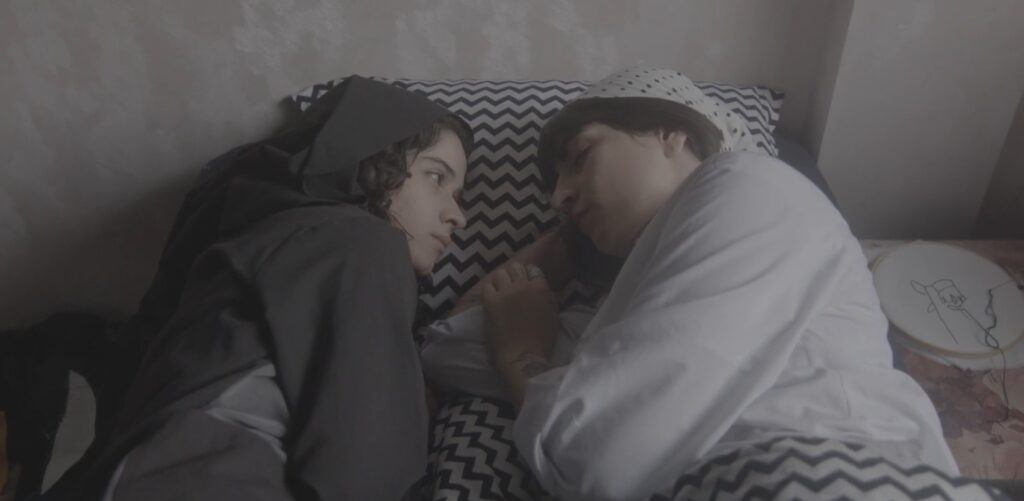
The film tells a story about the relationship between a daughter and her mother. This intimate subject became the starting point for an approach in which music, silence, and noise work together to express what the characters cannot always communicate through words.
A Piano and Cello Dialogue: Two Instruments, One Story
For Nora, I composed a duet for piano and cello. However, the intention was not simply to create a beautiful musical arrangement. I wanted these instruments to behave like two characters having a conversation.
Throughout the film, the piano and cello develop a musical relationship that reflects the emotional connection between the daughter and her mother. Sometimes they respond to each other, sometimes they move in different directions, and sometimes one instrument remains alone while the other disappears.
This dialogue became the foundation of the film’s musical narrative.
Instead of assigning a fixed emotional meaning to each instrument, I allowed their interaction to evolve with the story. Their musical relationship could suggest closeness, distance, tension, or emotional uncertainty without directly explaining what the characters were feeling.
I believe this is one of the most interesting possibilities in film composition: allowing musical instruments to become independent narrative voices.
Silence and Noise in Film Scoring
One of my main concerns while composing Nora was finding the right relationship between music, noise, and silence.
Silence and noise in film scoring are often treated as secondary elements, but I wanted them to have an active role in the storytelling of this film.
Silence was not simply the absence of music. It was a carefully considered part of the composition. By removing musical elements at specific moments, I created space for the audience to experience the emotional weight of a scene without being guided by a continuous soundtrack.
These moments of silence also changed the way the piano and cello were perceived. When music returned, even a small musical gesture could carry a different emotional meaning.
Noise had another important function. Rather than treating every unwanted sound as something that needed to be removed, I explored how noise could become part of the film’s sonic language. It helped create contrast with the acoustic instruments and added another dimension to the emotional atmosphere.
For me, the relationship between silence and noise is an essential part of experimental film scoring. Both can communicate something that a conventional melody might struggle to express.
When Sound Design Becomes Part of the Music
In Nora, I approached composition and sound design as closely connected creative processes.
The boundary between music and sound was not always clear. The piano and cello provided the main musical language, while noise and carefully designed silences helped shape the surrounding sonic environment.
This approach allowed the soundtrack to move beyond the traditional relationship between background music and visual storytelling.
I believe sound design should not always be treated as a separate technical layer added after the composition. In many films, the most interesting results happen when music, noise, and silence are considered together from the beginning.
For directors, this can open up new possibilities. A sound does not always need to be recognizable as music to contribute to the emotional identity of a scene.
Creating Emotion Without Explaining It
Working on Nora was an opportunity to explore how a limited musical palette can carry an entire emotional narrative.
With only two main instruments, I focused on their interaction, the spaces between their musical phrases, and the moments when sound disappeared completely.
Rather than constantly telling the audience what to feel, I wanted the soundtrack to leave room for interpretation. The piano and cello could communicate, disagree, or remain silent, just as people sometimes do in their closest relationships.
This is an approach I find particularly interesting in independent cinema, where music does not always need to be large or emotionally explicit to be effective.
Sometimes, a single musical gesture, a carefully placed noise, or a moment of silence can reveal more than an entire orchestral passage.
Nora, directed by Siavash Ameli, was an opportunity to explore this idea and create a soundtrack in which music and sound design become part of the film’s storytelling language.
If you are looking for an original soundtrack for your next short film or independent project, feel free to [explore my portfolio] or [get in touch].
