
Creative Film Scoring: The Handmade Morin Khuur in Baby Giant
Creative film scoring is not always about choosing the right instruments from an existing collection. Sometimes, it begins with creating a completely new sound. For Baby Giant, a short film directed by Zohreh Naeimi, I explored this idea through a handmade morin khuur and an experimental electroacoustic approach. The goal was to create a musical language that could support the film’s atmosphere while bringing unusual and personal sounds into its world.
Creating a Unique Sound Through a Handmade Instrument
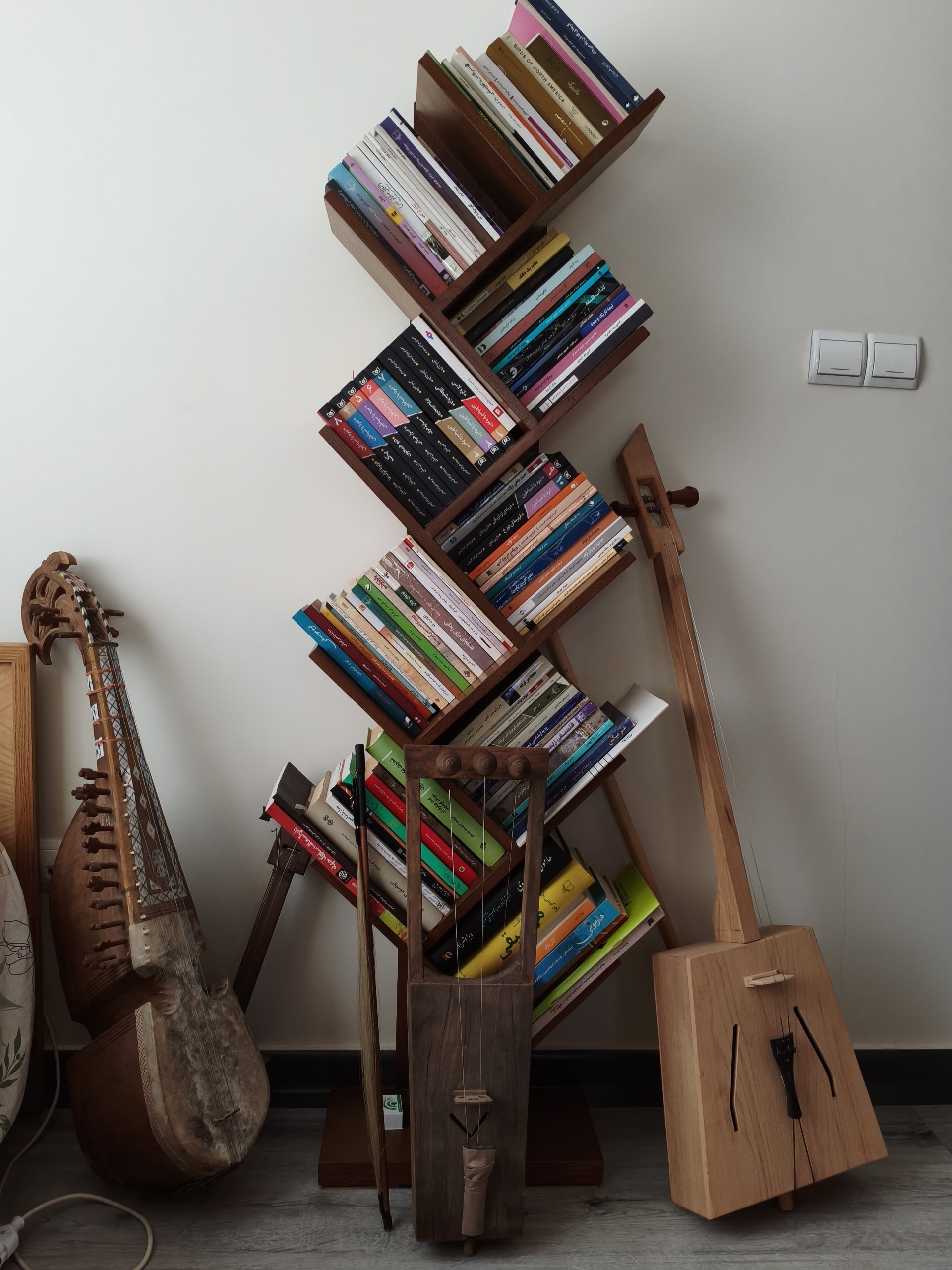
One of the most personal parts of this project was using a morin khuur that I had built myself. Instead of depending entirely on traditional orchestral instruments or digital sound libraries, I wanted to work with an instrument that could offer a different range of textures and sonic possibilities.
The morin khuur is a traditional Mongolian bowed string instrument. Its expressive, sometimes rough and raw sound makes it particularly interesting for experimental film music. My version was handmade through a process of designing, building, assembling, and experimenting with its physical structure and sound.
Building the instrument was not simply about reproducing an existing musical instrument. It was also an exploration of sound. I wanted to discover what kinds of textures, resonances, and unusual tones I could get from an instrument made by my own hands.
After building it, I experimented with different playing techniques and recording approaches to understand its sonic possibilities. Some of its sounds could work as recognizable musical phrases, while others were more interesting as abstract textures.
This process gave me something that a conventional sample library could not easily provide: a personal sound with its own physical character and imperfections.
An Electroacoustic Approach to Film Music
The musical language of Baby Giant was developed through an electroacoustic approach. I combined the acoustic sounds of handmade instruments with electronic elements, processing, and carefully designed layers.
For me, electroacoustic film music is not simply about combining electronic and acoustic instruments. It is about allowing these different sound worlds to interact and create something that neither could achieve independently.
The sounds of the morin khuur became an important part of this process. I explored its low-register plucked sounds, bowed textures, and different articulations, then placed them alongside electronic sounds and rhythmic elements.
Rather than treating every sound as a traditional musical instrument, I approached some of them as sound-design materials. A sustained synthesizer tone, for example, could function somewhere between a musical note and a sound effect.
This approach allowed the music to move between recognizable musical structures and more abstract sound textures.

Building Tension Through Minimal Musical Layers
One of the interesting challenges in scoring Baby Giant was creating tension without using too many musical elements.
In the chase sequence, I wanted the music to develop gradually alongside the events on screen. Instead of introducing a complete musical arrangement from the beginning, I built the cue through a series of carefully timed layers.
The first layer used low, plucked sounds to establish a rhythmic foundation. As the scene progressed, bowed textures entered and expanded the sonic atmosphere. Later, a vocal performance recorded by Saba became another element of the composition.
Each layer was introduced in response to a change in the scene. This allowed the music to grow naturally rather than simply playing continuously over the images.
The tempo and musical energy also developed with the increasing anxiety and curiosity of the sequence. I used small changes in rhythm, texture, and density to support the movement of the scene.
This was an important part of my approach to creative film scoring: sometimes, adding a single sound at the right moment can be more effective than introducing an entire musical arrangement.
Treating Sound as Part of the Musical Composition
Another important aspect of my approach was the relationship between music and sound design.
I am interested in the space between these two disciplines, where a sound can work as both a musical element and a narrative device. In Baby Giant, this meant exploring the possibilities of sustained electronic sounds, unusual instrumental articulations, and layered acoustic textures.
Instead of separating musical instruments from sound-design elements, I tried to create a unified sonic environment. This gave me more freedom to respond to the visual and emotional development of the film.
The result was a score built around unusual timbres, gradual transformations, and a balance between acoustic and electronic sounds.
Creative Film Scoring Beyond Conventional Instruments
Working on Baby Giant was another opportunity to explore how handmade instruments and electroacoustic techniques can expand the possibilities of film music.
For me, creative film scoring is not necessarily about making music more complicated or introducing unusual sounds just for the sake of experimentation. It is about finding the right sonic identity for each film and being open to unconventional methods when the story requires them.
Building and using my own morin khuur allowed me to approach the film from a different perspective. It connected the physical process of making an instrument with the creative process of composing music.
Baby Giant, directed by Zohreh Naeimi, became an opportunity to explore this relationship between instrument building, experimental sound, and cinematic storytelling.
If you are looking for an original soundtrack for your next short film or independent project, feel free to [explore my portfolio] or [get in touch].
